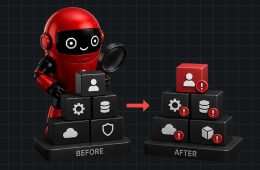
Signs Your Organization Needs CSPM
Cloud Security Posture Management (CSPM) isn’t something every organization needs on day one.
But as cloud environments grow, manual security reviews become increasingly difficult to sustain. Resources change constantly, compliance requirements expand, and security teams spend more time finding issues than fixing them.
If any of the following situations sound familiar, it may be time to evaluate a CSPM solution.
Quick Answer
Your organization likely needs CSPM if you’re managing multiple cloud environments, struggling with cloud visibility, preparing for frequent compliance audits, or finding it difficult to identify and prioritize cloud security risks. CSPM automates continuous monitoring, configuration assessment, and compliance tracking, reducing the operational burden on security teams.
1. You’re Managing More Than One Cloud Provider
Managing AWS alone is challenging.
Managing AWS, Azure, and Google Cloud together is significantly more complex.
Each platform has its own services, security controls, and configuration models. Without a centralized view, it’s easy to miss security gaps.
Warning sign:
Your team switches between multiple cloud consoles just to understand your security posture.
2. Cloud Deployments Are Happening Faster Than Security Reviews
Modern cloud environments change daily.
New virtual machines, storage accounts, Kubernetes clusters, and IAM roles are created continuously through automation and CI/CD pipelines.
If security reviews happen monthly—or only before audits—there’s a good chance important configuration changes are being missed.
Warning sign:
Infrastructure changes faster than your security team can review it.
3. Preparing for Audits Takes Weeks
If compliance means collecting screenshots, exporting reports, and manually checking cloud configurations, your process probably isn’t scalable.
As environments grow, audit preparation becomes increasingly time-consuming.
Warning sign:
Your team treats every audit as a separate project.
CSPM continuously evaluates cloud resources against frameworks like CIS, NIST, ISO 27001, SOC 2, and PCI DSS, helping organizations stay audit-ready throughout the year instead of only before an assessment.
4. You Don’t Have Complete Visibility Into Cloud Assets
Can you confidently answer these questions?
- How many cloud resources are currently running?
- Which assets are internet-facing?
- Which storage buckets are public?
- Which identities have administrative privileges?
If the answer is “I’m not sure,” visibility has become a problem.
Warning sign:
You discover cloud resources only after someone points them out.
5. Misconfigurations Keep Appearing
Cloud misconfigurations are rarely intentional.
They’re usually the result of rapid deployments, temporary configuration changes, or human error.
If the same issues continue appearing—public storage, excessive IAM permissions, disabled logging—it suggests manual reviews aren’t keeping pace with cloud changes.
Warning sign:
Security teams repeatedly fix the same types of cloud configuration issues.
6. Your Team Is Drowning in Alerts
Generating alerts isn’t difficult.
Understanding which alerts actually matter is.
If security analysts spend hours sorting through findings to identify real risks, they’re losing valuable time.
Warning sign:
Your backlog keeps growing even though the team works hard to reduce it.
Modern CSPM platforms prioritize findings based on context, helping teams focus on the risks with the greatest business impact rather than treating every issue equally.
7. Security and Compliance Operate Separately
Many organizations still treat security and compliance as separate activities.
Security teams focus on reducing risk.
Compliance teams prepare for audits.
In reality, both groups are evaluating many of the same cloud configurations.
Warning sign:
The same cloud resources are reviewed multiple times by different teams.
A CSPM platform creates a shared view of cloud posture, making collaboration between security and compliance much more efficient.
8. You Rely Entirely on Native Cloud Security Tools
AWS, Azure, and Google Cloud all provide excellent native security services.
The challenge is that each only provides visibility into its own environment.
As organizations adopt a multi-cloud strategy, maintaining consistent security policies across providers becomes increasingly difficult.
Warning sign:
Each cloud team uses different tools, reports, and security standards.
A Simple Self-Assessment
Ask yourself these five questions:
- Do we operate across multiple cloud providers?
- Are cloud environments changing faster than security reviews?
- Is audit preparation still largely manual?
- Do we struggle to prioritize cloud security findings?
- Do we lack a single view of our cloud security posture?
If you answered “yes” to three or more, it’s worth evaluating whether CSPM can simplify your cloud security operations.
How Cloud Aran Helps
Cloud Aran helps organizations move from reactive cloud security to continuous cloud posture management.
By continuously monitoring AWS, Azure, and GCP environments, Cloud Aran identifies misconfigurations, tracks compliance posture, prioritizes security findings, and provides a unified view of cloud risks from a single platform.
Instead of waiting for the next audit or manually reviewing cloud resources, security teams gain continuous visibility into their environment and can respond to issues before they become security incidents.
Frequently Asked Questions
Is CSPM only for large enterprises?
No. Any organization running cloud workloads can benefit from CSPM, especially if cloud infrastructure changes frequently or compliance requirements are increasing.
Can native cloud security tools replace CSPM?
Native tools are valuable, but they primarily focus on their own cloud platform. CSPM provides centralized visibility, consistent policy enforcement, and continuous posture management across multi-cloud environments.
When is the right time to invest in CSPM?
Usually when manual cloud security reviews no longer scale. Common indicators include multi-cloud adoption, increasing compliance requirements, growing cloud infrastructure, and difficulty prioritizing security findings.
Conclusion
Most organizations don’t decide to implement CSPM because they need another security tool. They do it because their existing processes no longer keep up with the speed and complexity of the cloud.
If your team is spending more time searching for cloud security issues than resolving them, that’s often the clearest sign that it’s time to move from periodic reviews to continuous cloud security posture management.