Cloud environments are designed to change.
Developers deploy new infrastructure, update security groups, modify IAM policies, and scale workloads every day. Change itself isn’t the problem—untracked change is.
A firewall rule opened during troubleshooting, an encryption setting disabled for testing, or a manual change made directly in the cloud console can slowly move your environment away from its approved security baseline. This is known as configuration drift.
Left unchecked, configuration drift can introduce security gaps, break compliance, and create opportunities for attackers long before anyone notices.
Quick Answer
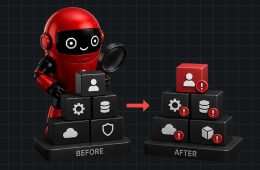
Cloud configuration drift occurs when the actual state of your cloud environment no longer matches its intended or approved configuration. You can detect it by continuously monitoring cloud resources, comparing them against security baselines or Infrastructure-as-Code (IaC), tracking unauthorized changes, and alerting teams whenever critical configurations change.
What Is Cloud Configuration Drift?
Configuration drift happens when cloud resources gradually diverge from their expected state.
Unlike a cyberattack, drift is usually caused by everyday operational changes.
Common examples include:
- A security group temporarily opened and never closed.
- A developer manually changing an IAM policy.
- A new storage bucket created without encryption.
- Audit logging disabled during troubleshooting.
- Infrastructure modified directly in the cloud console instead of through Terraform or CloudFormation.
Individually, these changes may seem harmless. Together, they weaken your security posture over time.
Why Configuration Drift Is So Dangerous
One of the biggest misconceptions is that configuration drift immediately causes incidents.
It doesn’t.
Instead, it silently erodes your security posture.
Imagine this sequence:
- An engineer opens SSH access to troubleshoot a production server.
- The issue is resolved, but the firewall rule isn’t removed.
- Months later, the server is still exposed to the internet.
- An attacker discovers the exposed service during an automated scan.
The security incident wasn’t caused by the troubleshooting session—it was caused by the forgotten configuration change.
That’s why drift is difficult to detect without continuous monitoring.
Common Causes of Configuration Drift
Most organizations experience configuration drift because of normal cloud operations.
The most common causes include:
- Manual changes outside Infrastructure as Code
- Emergency production fixes
- Temporary configuration changes that become permanent
- Permission changes without formal review
- Multiple teams managing the same cloud resources
- Inconsistent deployment processes across AWS, Azure, and GCP
The more dynamic your cloud environment becomes, the more likely configuration drift is to occur.
How to Detect Configuration Drift
1. Define a Secure Baseline
You can’t detect drift if you don’t know what “correct” looks like.
Create approved security baselines for:
- IAM permissions
- Security groups
- Storage access
- Encryption
- Logging
- Network policies
Whether those baselines come from CIS Benchmarks, internal standards, or regulatory requirements, they become the reference point for future comparisons.
2. Continuously Compare Live Infrastructure
Periodic audits aren’t enough.
Cloud environments can change dozens—or even hundreds—of times in a single day.
Instead, continuously compare your live environment against:
- Infrastructure-as-Code templates
- Approved security policies
- Compliance baselines
The shorter the time between a change and its detection, the lower the risk.
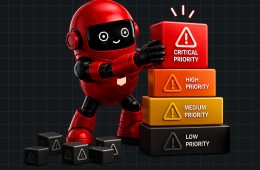
3. Monitor High-Risk Resources First
Not every configuration change has the same impact.
Prioritize monitoring for:
- Internet-facing resources
- Administrator IAM roles
- Production databases
- Storage services
- Kubernetes clusters
- Critical workloads
Focusing on high-risk assets helps security teams reduce meaningful risk instead of investigating every minor change.
4. Identify Changes Made Outside IaC
Infrastructure as Code provides a single source of truth—but only if everyone uses it.
When someone makes changes directly through the AWS Console, Azure Portal, or Google Cloud Console, production begins to diverge from the code.
These out-of-band changes are one of the clearest indicators of configuration drift. Detecting them early prevents future deployment conflicts and security issues.
Warning Signs That Drift Is Becoming a Security Problem
Configuration drift often goes unnoticed until one of these happens:
- The same misconfigurations keep reappearing.
- Audit findings increase every quarter.
- Different environments behave differently.
- Security policies aren’t applied consistently.
- Teams disagree about the “correct” configuration.
- Manual fixes become more common than automated deployments.
These are operational warning signs that your cloud environment is drifting away from its intended state.
Best Practices to Prevent Configuration Drift
While detection is important, prevention reduces long-term effort.
Some proven practices include:
- Treat Infrastructure as Code as the source of truth.
- Limit direct changes in production.
- Enforce change approval processes.
- Review privileged access regularly.
- Continuously monitor security baselines.
- Automate remediation for low-risk policy violations.
The objective isn’t to stop change—it’s to ensure every change is intentional, approved, and traceable.
Expert Insight
Many teams try to solve configuration drift with better monitoring. In practice, the bigger improvement often comes from reducing the number of people and systems that can make production changes. Fewer uncontrolled changes mean less drift to detect in the first place.
How Cloud Aran Helps
Cloud Aran continuously monitors AWS, Azure, and GCP environments to detect configuration drift before it leads to security incidents or compliance failures.
By comparing live cloud resources against approved security policies, Cloud Aran identifies unauthorized changes, highlights compliance drift, prioritizes high-risk findings, and provides a unified view of your cloud security posture. This allows security teams to respond to risky configuration changes before they become operational or audit problems.
Frequently Asked Questions
What is cloud configuration drift?
Cloud configuration drift occurs when the actual configuration of cloud resources gradually differs from the intended or approved configuration because of manual changes, automation, or unmanaged updates.
Why is configuration drift a security risk?
Configuration drift can expose cloud resources, weaken access controls, disable security protections, or create compliance gaps. Small changes that go unnoticed over time often become the root cause of larger security incidents.
Can CSPM detect configuration drift?
Yes. One of the primary capabilities of a Cloud Security Posture Management (CSPM) platform is continuously monitoring cloud environments, identifying configuration changes, detecting policy violations, and alerting teams when resources drift from approved security baselines.
Conclusion
Configuration drift isn’t a rare event—it’s a normal part of operating in the cloud.
The organizations that avoid security incidents aren’t the ones that stop infrastructure from changing. They’re the ones that know when, where, and why it changed.
By establishing clear security baselines, monitoring cloud environments continuously, and identifying unauthorized changes early, organizations can reduce risk, simplify compliance, and prevent small configuration changes from becoming major security incidents.