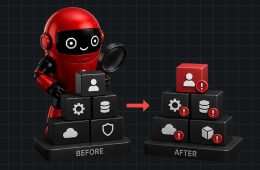
Many organizations assume that implementing cloud security posture management (CSPM) is enough to ensure compliance. Alerts are active, dashboards look healthy, and scans are running. On the surface, everything appears under control.
However, audits often reveal a different reality. The issue is not the absence of CSPM—but gaps in how it is configured, used, and aligned with compliance requirements.
This guide outlines the hidden compliance gaps within CSPM setups that auditors commonly identify—and how to address them.
Why CSPM Alone Does Not Guarantee Compliance
CSPM is designed for visibility and detection. Compliance requires:
- Control enforcement
- Continuous validation
- Audit-ready evidence
If CSPM is not configured with these outcomes in mind, it becomes a monitoring tool—not a compliance solution.
Gap 1: Alerts Without Compliance Context
Many CSPM setups generate alerts that are not mapped to compliance frameworks.
This leads to:
- Teams fixing issues without knowing audit impact
- Missed control violations
- Difficulty demonstrating compliance alignment
Without mapping alerts to frameworks like SOC 2 or ISO 27001, your cloud security posture may look strong—but still fail audit checks.
Gap 2: Incomplete Asset Coverage
CSPM is only as effective as the scope it covers.
Common gaps:
- Unmonitored accounts or subscriptions
- Shadow IT resources
- Newly created assets not included in scans
Auditors often identify these blind spots quickly. A complete and continuously updated inventory is essential for accurate security posture management.
Gap 3: Policy Detection Without Enforcement
Detecting a violation is not the same as preventing it.
Typical issues:
- Policies exist but are not enforced automatically
- Misconfigurations are repeatedly identified
- Teams rely on manual remediation
Compliance requires consistent enforcement, not repeated detection.
Gap 4: Weak Mapping to Compliance Controls
Even when CSPM identifies issues, they are often not tied to specific control requirements.
This creates:
- Gaps in compliance reporting
- Difficulty proving control coverage
- Misalignment between technical findings and audit expectations
Strong cloud security posture management requires direct mapping between configurations and compliance controls.
Gap 5: Lack of Continuous Validation
Some CSPM setups rely on scheduled scans rather than real-time monitoring.
This results in:
- Missed short-lived misconfigurations
- Delayed detection of violations
- Inconsistent compliance validation
Continuous monitoring ensures that compliance is maintained, not just periodically assessed.
Gap 6: Missing Audit-Ready Evidence
CSPM tools detect issues but often do not retain sufficient historical data.
Auditors expect:
- Logs of control enforcement
- Configuration history
- Evidence of remediation actions
Without automated evidence collection, passing a cloud compliance audit becomes difficult—even if issues are resolved.
Gap 7: No Pre-Audit Validation Process
Many teams rely entirely on CSPM alerts without conducting structured validation before audits.
A cloud security posture review (CSPR) helps:
- Validate controls against compliance frameworks
- Identify unresolved gaps
- Ensure readiness before audit evaluation
Skipping this step increases the likelihood of audit findings.
Gap 8: Fragmented Multi-Cloud Coverage
In multi-cloud environments, CSPM setups are often incomplete or inconsistent.
Common problems:
- Different configurations across AWS, Azure, and GCP
- Lack of centralized policy enforcement
- Inconsistent reporting formats
Effective multi-cloud governance requires unified visibility and control across all environments.
Gap 9: Alert Fatigue and Poor Prioritization
High volumes of alerts reduce effectiveness.
This leads to:
- Critical issues being overlooked
- Delayed remediation
- Misalignment with compliance priorities
Prioritization should be based on compliance impact, not just severity.
Gap 10: Static Configuration Without Drift Management
Even well-configured environments degrade over time.
Without drift detection:
- Policies are bypassed
- Configurations become inconsistent
- Compliance gaps reappear
A mature CSPM setup continuously detects and corrects configuration drift.
What a Compliance-Ready CSPM Setup Looks Like
Organizations that avoid these gaps typically:
- Map all findings to compliance controls
- Maintain full asset visibility
- Enforce policies automatically
- Monitor continuously
- Automate evidence collection
- Conduct regular posture reviews
This transforms CSPM from a detection tool into a compliance engine.
Final Thoughts
CSPM is a critical foundation—but it is not a complete solution on its own. Hidden gaps in configuration, coverage, and validation can undermine compliance efforts and lead to audit failures.
By aligning your CSPM setup with compliance requirements and reinforcing it with continuous monitoring and structured reviews, you can eliminate these gaps before auditors find them.
When properly implemented, cloud security posture management moves beyond visibility—and becomes a reliable system for maintaining audit-ready cloud security.