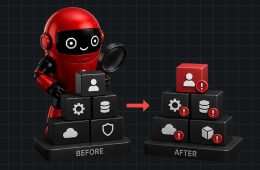
For many teams, cloud security posture management (CSPM) starts as a periodic activity—run a scan, fix a few issues, and move on. On the surface, this seems efficient. In reality, it creates gaps that become visible during audits, incidents, or unexpected configuration changes.
The question is not whether CSPM is necessary. The real question is whether continuous monitoring is required—or if periodic checks are enough.
Why Periodic CSPM Feels Sufficient
Periodic scans appeal because they are simple:
- Lower immediate effort
- Easier to schedule
- Fewer alerts to manage
For small or static environments, this approach may appear to work. But cloud environments are rarely static.
Resources are constantly:
- Created and deleted
- Reconfigured by different teams
- Updated through automation pipelines
This constant change introduces risk between scans—risk that periodic checks cannot capture.
The Reality: Cloud Environments Change Continuously
Every deployment, configuration update, or access change can introduce a new risk.
Common scenarios:
- A storage bucket becomes public during a deployment
- A role is granted excessive permissions temporarily
- Logging is disabled during troubleshooting and not restored
These changes may exist for hours or days before being detected—if detection relies on scheduled scans.
A stable cloud security posture cannot depend on intermittent visibility.
The Core Limitation of Periodic Monitoring
Periodic CSPM answers one question:
“What is the state of the environment at this moment?”
Continuous monitoring answers a different question:
“What changes are happening, and are they compliant right now?”
For compliance and audit readiness, the second question matters more.
Where Periodic CSPM Breaks Down
- Configuration Drift Goes Unnoticed
Even if your environment is compliant today, it may not be tomorrow. Without continuous monitoring, drift accumulates silently. - Short-Lived Risks Are Missed
Temporary misconfigurations can still lead to exposure or compliance violations. Periodic scans often miss these windows. - Delayed Remediation
Issues are only discovered at the next scan cycle, increasing response time and risk.
4. Incomplete Audit Evidence
Auditors expect proof of continuous control enforcement. Snapshots from periodic scans are often insufficient for a cloud compliance audit.
What Continuous CSPM Monitoring Actually Provides
Continuous monitoring is not just about frequency—it is about consistency and control.
Key capabilities include:
- Real-time detection of misconfigurations
- Immediate alerts for policy violations
- Continuous validation against compliance frameworks
- Tracking of configuration changes over time
This ensures that compliance is maintained, not just checked.
The Role of Continuous Monitoring in Compliance
Compliance frameworks increasingly expect:
- Ongoing control enforcement
- Continuous visibility
- Verifiable audit trails
A mature cloud security posture management approach aligns directly with these expectations by ensuring that:
- Controls are always active
- Violations are detected immediately
- Evidence is continuously collected
This reduces audit risk and simplifies reporting.
Where a Posture Review Still Fits
Continuous monitoring does not replace structured validation.
A cloud security posture review (CSPR) remains important for:
- Pre-audit validation
- Control verification across frameworks
- Identifying gaps that require deeper analysis
The combination of continuous monitoring and periodic reviews creates a complete compliance model.
When Continuous CSPM Might Seem Unnecessary
There are limited cases where teams may question the need:
- Very small environments
- Non-critical workloads
- Low compliance requirements
However, as soon as environments scale or compliance becomes a requirement, periodic monitoring becomes insufficient.
The Cost Perspective
Some teams avoid continuous monitoring due to perceived cost or operational overhead.
In practice, the cost of not monitoring continuously includes:
- Increased audit effort
- Higher risk of compliance failure
- Longer remediation cycles
- Potential security incidents
Continuous monitoring reduces these downstream costs by addressing issues early.
What Effective Monitoring Looks Like
Organizations that adopt continuous CSPM typically:
- Monitor configurations in real time
- Enforce policies automatically
- Prioritize risks based on compliance impact
- Maintain audit-ready evidence continuously
This creates a stable and predictable security posture management model.
Final Thoughts
Periodic CSPM monitoring provides snapshots. Continuous monitoring provides assurance.
In dynamic cloud environments, snapshots are not enough to maintain compliance or reduce risk. Continuous visibility, validation, and enforcement are required to keep environments secure and audit-ready.
For most organizations, the question is no longer whether continuous CSPM monitoring is necessary—but how quickly they can adopt it effectively.