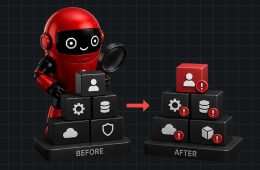
Passing a compliance audit isn’t the hard part—staying compliant is.
Cloud environments change every day. New resources are deployed, permissions are updated, and infrastructure is modified through CI/CD pipelines. A cloud environment that passed a SOC 2 audit last month could violate multiple controls today without anyone noticing.
This is why organizations are moving away from periodic compliance checks and adopting continuous compliance.
Cloud Security Posture Management (CSPM) enables continuous compliance by continuously assessing cloud resources against security policies and regulatory frameworks, helping organizations identify compliance gaps as they occur rather than during the next audit.
Quick Answer
CSPM enables continuous compliance by automatically monitoring cloud environments against security frameworks such as CIS, NIST, ISO 27001, SOC 2, PCI DSS, and HIPAA. Instead of relying on manual audits, it continuously detects configuration drift, identifies non-compliant resources, and provides remediation guidance to help organizations maintain compliance throughout the year.
Why Traditional Compliance Doesn’t Work in the Cloud
Traditional compliance follows a familiar pattern:
- Prepare for the audit.
- Collect evidence.
- Fix identified issues.
- Pass the audit.
- Repeat next year.
That approach worked when infrastructure changed slowly.
Cloud environments don’t.
A developer can deploy dozens of new resources in a single day. Infrastructure-as-Code templates evolve, IAM permissions expand, and cloud services are constantly updated. By the time the next audit arrives, your environment may look completely different.
Compliance can no longer be treated as a once-a-year exercise.
What Is Continuous Compliance?
Continuous compliance means verifying that your cloud environment remains aligned with internal policies and regulatory requirements at all times—not just during an audit.
Instead of asking:
“Were we compliant when the auditor checked?”
The question becomes:
“Are we compliant right now?”
That’s a significant shift because it turns compliance into an ongoing operational process rather than a project.
How CSPM Supports Continuous Compliance
CSPM automates much of the work that traditionally required manual reviews.
Continuous Configuration Assessments
Every time cloud infrastructure changes, CSPM evaluates the new configuration against predefined security policies.
For example, it can detect:
- Public storage buckets
- Disabled encryption
- Open management ports
- Missing logging
- Weak IAM policies
Rather than waiting for an audit, security teams receive immediate visibility into these issues.
Continuous Framework Mapping
Most organizations don’t follow just one compliance framework.
They often need to satisfy multiple standards simultaneously.
Modern CSPM platforms continuously map cloud configurations against frameworks such as:
- CIS Benchmarks
- SOC 2
- ISO 27001
- PCI DSS
- HIPAA
- NIST
This makes it easier to understand which controls are compliant, which are failing, and where remediation is required.
Detecting Compliance Drift
Passing an audit doesn’t prevent future configuration changes.
This is known as compliance drift—when resources gradually move away from approved security baselines.
For example:
A storage account was encrypted during your audit.
Six months later, someone deploys a new storage account without encryption.
Your environment is now partially non-compliant.
Without continuous monitoring, that issue may remain unnoticed until the next audit.
CSPM detects these changes automatically, allowing teams to remediate them early.
Simplifying Audit Preparation
One of the biggest compliance challenges isn’t fixing issues—it’s proving that controls are working.
Auditors often request evidence such as:
- Configuration settings
- Security policies
- Encryption status
- Access controls
- Logging configuration
Without automation, gathering this information can take days or even weeks.
CSPM continuously collects compliance data and generates reports, significantly reducing the time required to prepare for audits.
Compliance Isn’t Just About Passing Audits
Many organizations approach compliance as a checklist.
That mindset creates unnecessary risk.
The real objective of frameworks like SOC 2, ISO 27001, and NIST isn’t passing an assessment—it’s maintaining secure systems.
Continuous compliance helps organizations achieve both goals.
When security improves, compliance naturally becomes easier to maintain.
Best Practices for Continuous Compliance
Organizations typically get the best results when they:
- Continuously monitor cloud resources instead of scheduling periodic reviews.
- Integrate compliance checks into CI/CD pipelines.
- Prioritize high-risk findings first.
- Automate repetitive remediation tasks where appropriate.
- Review compliance dashboards regularly rather than only before audits.
Continuous compliance should become part of everyday cloud operations—not an annual project.
How Cloud Aran Helps
Cloud Aran helps organizations maintain continuous compliance across AWS, Azure, and GCP by continuously monitoring cloud configurations, detecting compliance drift, and mapping findings to industry frameworks.
Instead of manually reviewing thousands of cloud resources before every audit, security teams gain real-time visibility into their compliance posture, helping them identify gaps early, prioritize remediation, and remain audit-ready throughout the year.
Frequently Asked Questions
What is continuous compliance?
Continuous compliance is the process of continuously monitoring cloud environments to ensure they remain aligned with security policies and regulatory frameworks rather than checking compliance only during periodic audits.
Can CSPM replace compliance audits?
No. CSPM doesn’t replace external or internal audits. It helps organizations prepare for them by continuously identifying compliance gaps and providing evidence that controls are being maintained.
Which compliance frameworks does CSPM support?
Most enterprise CSPM platforms support frameworks such as CIS Benchmarks, NIST, ISO 27001, SOC 2, PCI DSS, and HIPAA through continuous policy evaluation and compliance reporting.
Conclusion
Compliance isn’t a milestone—it’s an ongoing process.
As cloud environments become more dynamic, relying on periodic audits alone creates gaps that can lead to security risks and failed compliance checks.
By continuously monitoring cloud configurations, detecting compliance drift, and providing actionable remediation guidance, CSPM helps organizations move from reactive audit preparation to continuous audit readiness. That’s not only more efficient—it also strengthens the overall security of the cloud environment.